The first steps in learning to read old or uncommon scripts …
(and this is among the fundamentals of paleography) is (comparative reading) between similar texts …
texts easy to reach, in scripts the researcher knows and can read with ease …
The Qur’anic texts come as the most important text through which one can compare … because the Qur’an is available in the easy-to-read Naskh script …
That faculty (try to make it something like a hobby for you) will open the door to reading non-Arabic texts (Persian or Ottoman, for example), or hard-to-read ones (such as the Maghribi script) …
in which a given script is recorded, with ease …
By practicing that hobby you will acquire your (visual dictionary) …
and this dictionary is a very important foundation, a pillar upon which the science of paleography stands, in its simplest form …
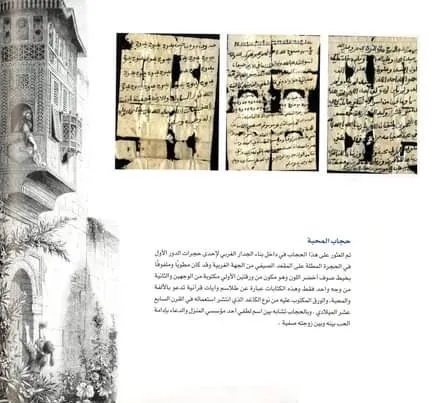
The following text is in the Shikaste script …
and it is easy to compare the same Qur’anic sura in the Naskh script …
and also in the Nastaʿliq (Persian) script …
In the name of God, the Most Gracious, the Most Merciful. Exalt the name of your Lord, the Most High, who created and proportioned, and who destined and [then] guided, and who brings out the pasture and then makes it black stubble. We will make you recite, [O Muhammad], and you will not forget, except what God should will. Indeed, He knows what is declared and what is hidden. And We will ease you toward ease. So remind, if the reminder should benefit; he who fears [God] will be reminded, but the wretched one will avoid it, he who will [enter and] burn in the greatest Fire, then neither die therein nor live. He has certainly succeeded who purifies himself, and mentions the name of his Lord and prays. But you prefer the worldly life, while the Hereafter is better and more enduring. Indeed, this is in the former scriptures, the scriptures of Abraham and Moses. (Surat al-Aʿla, 87:1 to 19)