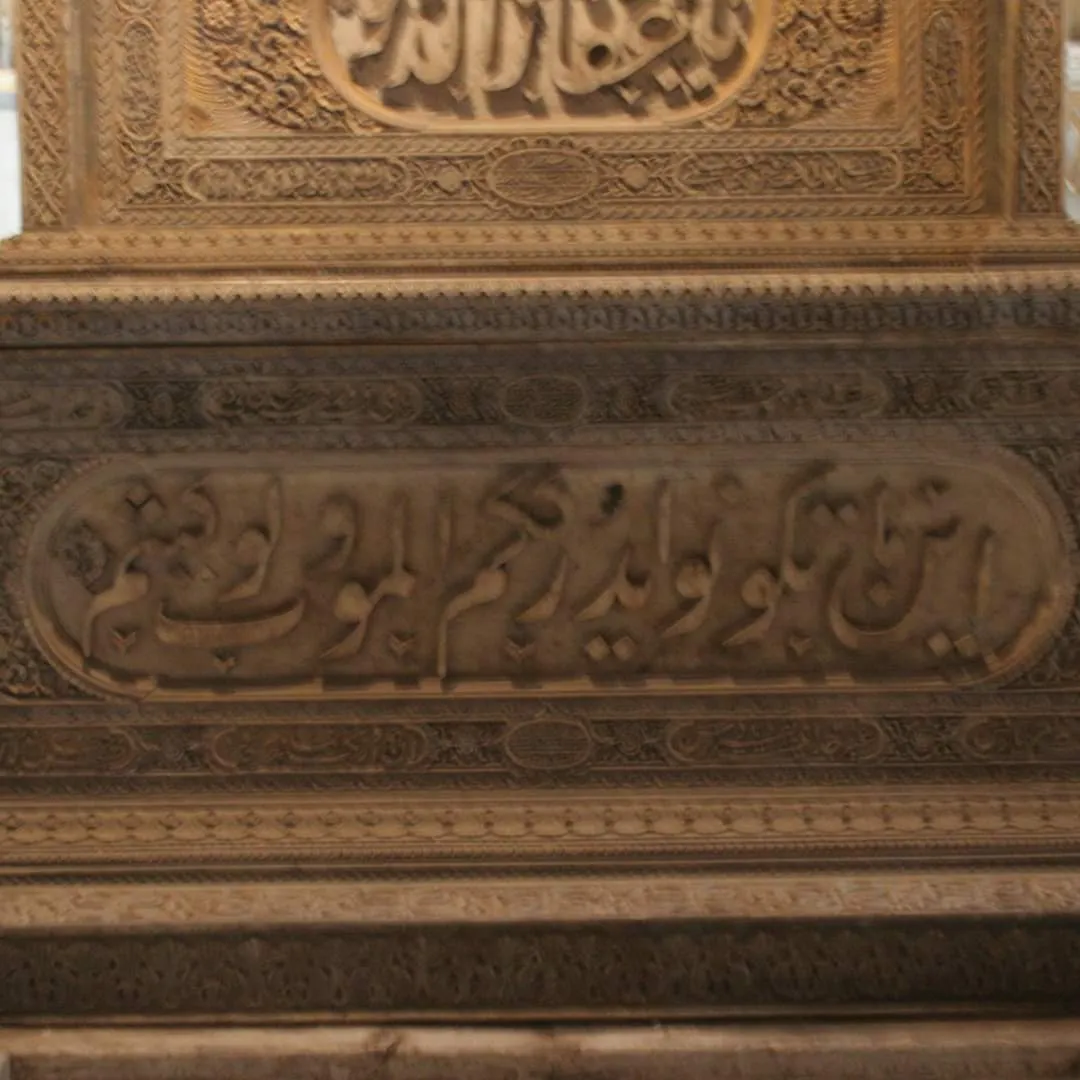
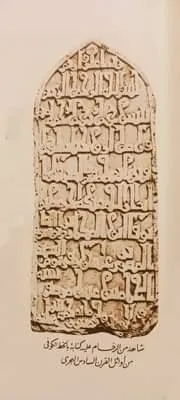
The inscriptions of Hajj Ahmad al-Kamel, the chief of calligraphers, in the mosque of Prince Mohamed Ali attached to the prince’s palace at Manial, are a state of artistic and spiritual serenity. They render with great competence the talent and the precision of the letters of my master Ahmad al-Kamel, the last of the chief calligraphers of the Ottoman state.
The near-regular oval mass of the designs; the mastery of inflection and succession in the letters of the Thuluth script; the regularity and integration of the ornaments and the vocalization marks with the letters and the edges of the words: all of it executed with consummate craftsmanship.
This famous panel includes the names of the craftsmen and artisans of an important period in Egypt’s history, the first quarter of the twentieth century; it bears the names of the craftsmen who undertook the work on that great edifice. So, besides its artistic splendor, it is a historical document that ought to be studied, the figures named in it identified, alongside a transcription of the scripts and ornaments of this panel and the one beside it: a magnificent subject for study and research.
The museum of the Prince Mohamed Ali Palace at Manial, in Cairo, is a pearl among the pearls of Islamic art.